


























Part 3 in the series about the global family court — Three American stories of children who refused to surrender, and a judge who was publicly censured.
By Dee McLachlan
What happens when a child says, “I am not going back”? What happens when children have spoken out about the fear of a parent, but have not been believed by a court?
There are many cases – that are not made public – where children are so frightened of a parent that they refuse to enter a courtroom and so have to face the consequences of the fury of the court. The court has extraordinary powers to allegedly keep children safe, but what happens when the children believe they are being ordered into danger? They run, or barricade themselves inside a bedroom, or climb through a window to escape – many teens are desperate of desperate enough that the only option is to rescue themselves.
And what happens when the Family Court decides that the problem is not what the children fear — but the fact that they refuse to obey?
Today I discuss three cases. Across the United States, there are extraordinary cases of children fighting court-ordered parenting arrangements with every means available to them. Some run. Some hide. Others are sent to detention. Some make a plea to the public.
These are not fictional stories. They are documented cases involving court orders, police intervention, investigations and, in one remarkable instance, a judge who was publicly disciplined by her state’s highest court.
They raise a disturbing question: At what point does enforcing a Family Court order become more important than understanding why a child is resisting it?
Utah: 54 days – Bedroom Barricade
The Children Who Barricaded Their Bedroom for 54 Days
In Utah, two siblings took their resistance to an extraordinary level. They barricaded themselves in their bedroom for 54 Days. My immediate thought was: in Australia the Australian Federal Police can be ordered to use force if necessary, e.g.: “and if necessary by force to stop and search any vehicle, vessel or aircraft and to enter and search any premises or place in which there is, at any time…”
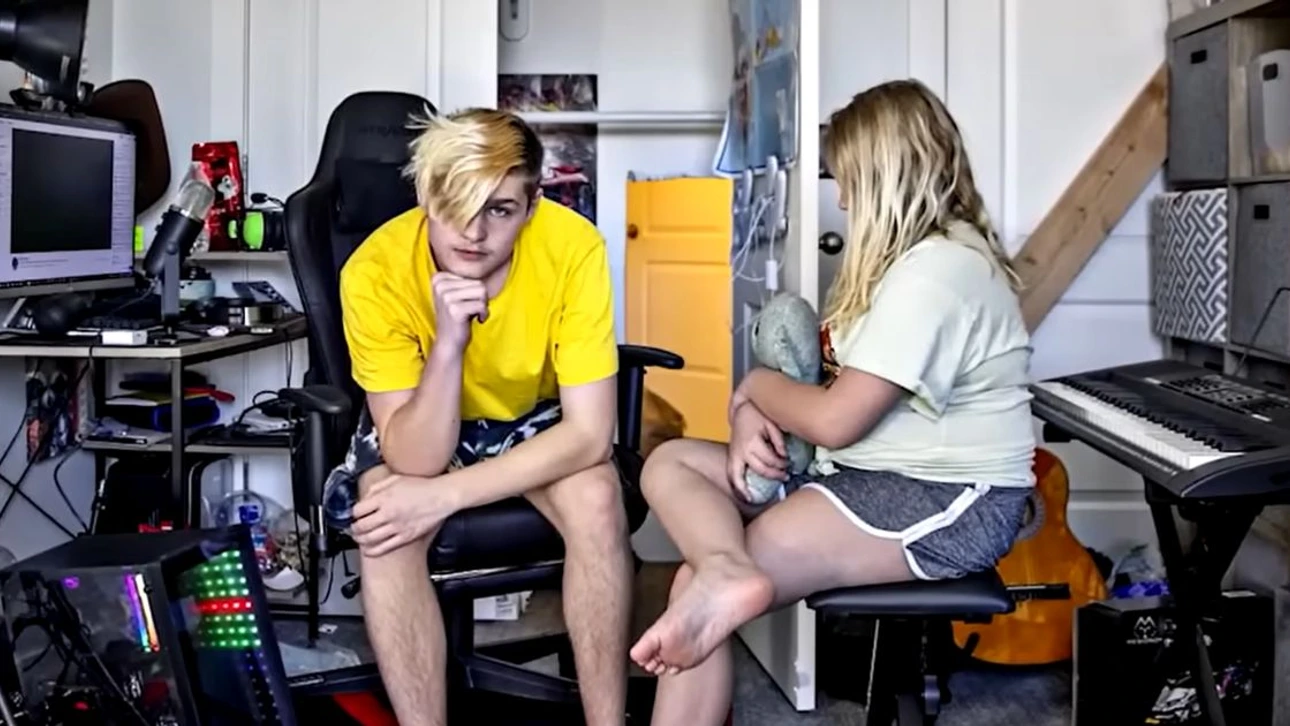
Ty Larson, 15, and his sister Brynlee, 12, barricaded themselves inside an upstairs bedroom at their mother’s home in early 2023. Their father, Brent Larson, had obtained a court order transferring legal custody to him following allegations that their mother had manipulated the children into rejecting him.
But the children said their father had abused them. (This is a very common theme.)
According to investigative reporting by ProPublica, Utah child-welfare investigators had previously substantiated serious abuse allegations. Their father disputed the allegations, and earlier prosecutors had concluded there was insufficient evidence to secure a conviction. The Family Court accepted an explanation based on parental alienation: that the children’s mother had influenced their rejection of their father. (Another very common theme in courts here.)
Judge Derek Pullan authorised police to use reasonable force to remove the siblings from their mother’s home. Rather than submit, Ty and Brynlee barricaded themselves behind a door.
For 54 days, they remained inside.
Ty began livestreaming their ordeal on TikTok, telling the world why they were resisting the order. The story attracted hundreds of thousands of viewers and national attention.
In March 2023, after new criminal investigations into the father emerged, Judge Pullan temporarily delayed enforcement of the custody order. The children emerged from their bedroom. It had forced renewed attention on their allegations and the consequences of the proposed custody transfer.
When children are willing to spend nearly two months barricaded in a bedroom — or when they are prepared to go to detention for two months – should the overriding question be how to remove them — or why they are prepared to go to such lengths?
New York: Window Escape
In 2016, 16-year-old Caleb Thomas was participating in a court-authorised reunification intervention in upstate New York. The program was associated with therapist Linda Gottlieb, who worked with families affected by allegations of parental alienation.
Thomas later told ProPublica that he had protested attempts to record his therapy sessions. According to his account, his father and another man pinned him to the floor. He said he escaped through a window, intending to return to his mother. Police caught him. A police report recorded allegations that he had been assaulted during the intervention. No criminal charges were filed.
What emerges is a deeply troubling picture: can trust be restored through an intervention that a child experiences as frightening or coercive? Rebuilding a damaged parent-child relationship may be a legitimate objective. But is forcing compliance?
Michigan: Children Sent to Detention — Judge Censured
In June 2015, three siblings in Oakland County, Michigan, found themselves facing an extraordinary punishment. Their offence? Refusing to speak to their father.
The children, then aged 13, 10 and nine had been caught in years of bitter custody litigation. They had repeatedly resisted parenting time with their father. The eldest boy said his father was violent and had witnessed him strike their mother.
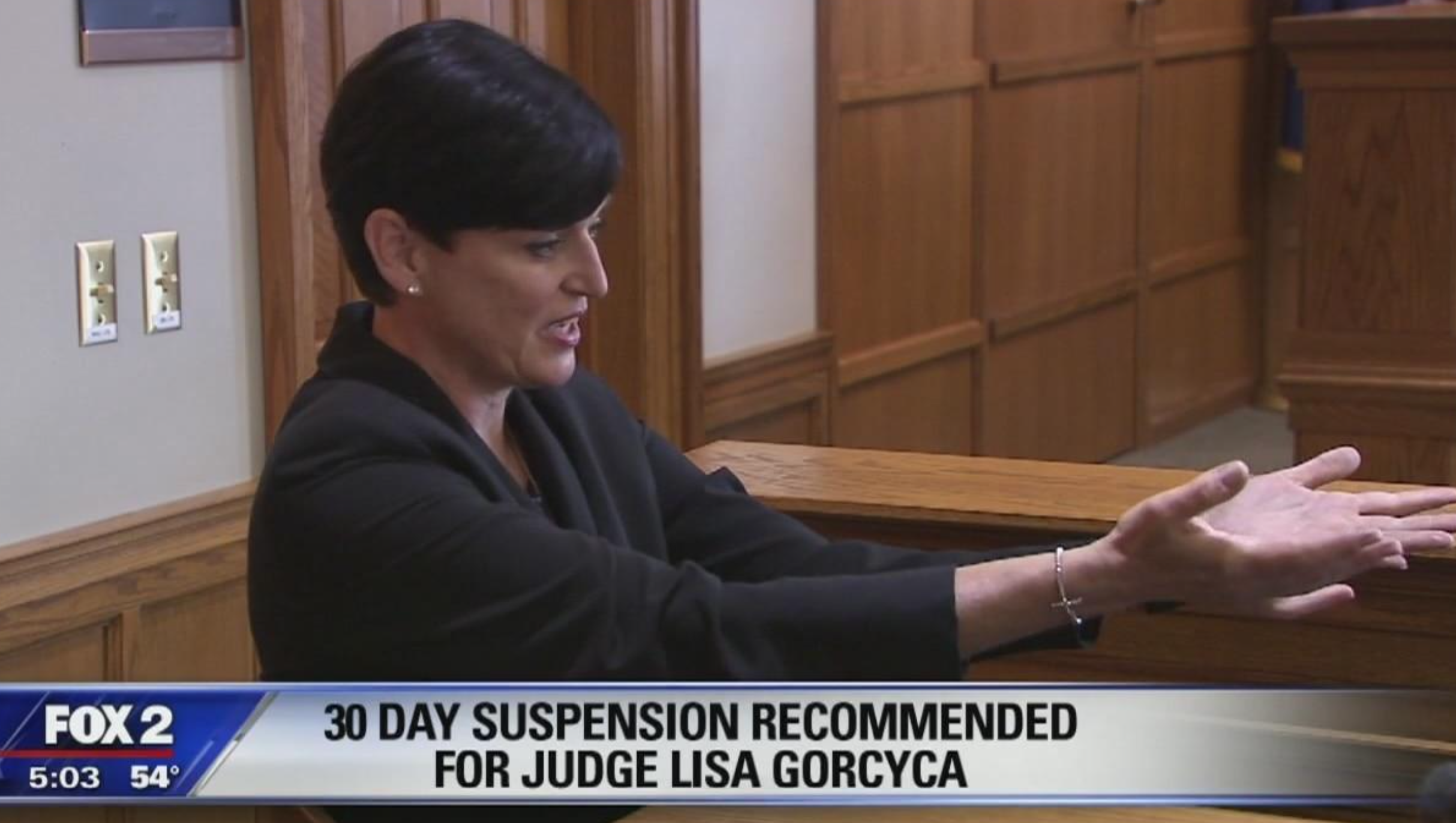
On 24 June 2015, Judge Lisa Gorcyca attempted to compel the children to communicate with their father. When they resisted, she found all three in contempt of court. They were handcuffed, removed from the courtroom and sent to Oakland County Children’s Village, a juvenile detention facility. Wow, there was a very similar story in Australia – maybe worse.
Three children refusing contact with a parent were placed in an institution for juvenile offenders. The oldest boy was not even scheduled for parenting time with his father that day. During the hearing, Judge Gorcyca directed demeaning remarks towards the children, including describing the eldest as “mentally messed up”.
The children spent approximately 17 days in detention. (Not much time compared to an Australian account.)
The episode attracted national attention. But unlike so many controversies involving Family Courts, this one produced a formal judicial misconduct investigation. Michigan’s Judicial Tenure Commission recommended that Judge Gorcyca receive a public censure and a 30-day suspension without pay.
On 28 July 2017, the Michigan Supreme Court publicly censured her. The majority held that her insulting and humiliating treatment of the children constituted judicial misconduct. It also identified legal errors in her use of contempt powers. The judge was not suspended, but she was formally and publicly disciplined.
It established something important for US courts: a judge’s responsibility to maintain dignity, restraint and proper judicial conduct does not disappear when children refuse to cooperate.
Many children are labelled “mentally messed up” but the court couches this as: “being influenced by the parent”, “coached”, or any disparaging remark that deems them non-think young people – when in fact these children are simply finding their own voice and are mentally strong enough to withstand the court’s bullying posture.
The Question for Australia
When children repeatedly express fear, resist contact, flee from a proposed placement or display severe psychological distress, those behaviours warrant careful, independent assessment. The essential task is to establish what is happening to the child and what arrangements will genuinely protect their welfare. That requires more than another order demanding compliance. It requires listening, investigating, testing competing explanations and recognising that forced proximity cannot manufacture love.
A court can order a child to attend… It cannot order a child to feel safe.
When a child runs from a parent, the first question should not simply be how to bring the child back. It should be why the child ran.
Sources
In re Hon. Lisa O. Gorcyca, Michigan Supreme Court, 28 July 2017, Docket No. 152831. Full judgment.
CBS Detroit/Associated Press, 28 July 2017. No Suspension for Oakland County Judge Who Locked Up Three Siblings.
ProPublica, February 2023. Utah Siblings Use TikTok to Fight Parental Alienation Order.
ProPublica, 16 March 2023. Utah Judge Pauses Order to Return Siblings to Father.
ProPublica, Hannah Dreyfus, 2023. In Court-Ordered Family Reunification Camps, Kids Allege More Abuse.
Editor’s note: The abuse allegations discussed above are distinguished from judicial findings and criminal convictions. The article draws on published reporting and the Michigan Supreme Court’s judgment.
Dee, thank you for this unexpected side of the story.
I have often mused over the judicial system being taken over by AI. Because of my experiences in court, I came to the conclusion that it would be worth at least a try. Actually, my deepest conviction is that the judiciary should be cleaned out and replaced with AI.
That said, there would need to be a human component to oversee the process, perhaps with fatal consequences for humans that compromise justice.
Here is a article on technology that indicates some of the concerns that many people have for technology. – https://www.technocracy.news/the-end-of-man-the-real-danger-isnt-artificial-intelligence/
Retired after 50 years in anther state.
No one should be appointed to the family court without serving at least two years hearing criminal jury trials.
Then they might have to determine the treatment, and circumstances when sentencing adults who as minors were dealt with by the attitude and decisions of the family court.
There are such obvious comments that I could make, so I will CONGRATULATE Dee WHO FOR THE CHILDREN, HAS DEVOTED SO MUCH TIME AND EFFORT with gumshoe has exposed a system which must fail for lack of transparency. Dee congratulations for all the years you have cared and stood up for the children, at least in two states.
AND I KNOW THIS. THE BLOODY MISERABLE LEGAL PROFESSION HAVE FAILED THE CHILDREN. THEY AFE AFRAJD TO HELP FOR FEAR OF BUCKING the ‘SYSTEM’…. As I have noted as obvious when I have approached the Victorian legal system. Even knocked back by a cousin practising in Victoria.
If I was the relevant minister, I would create panels of competent retired mums and dads with grandparents included to serve a day listening to the kids in camera. Say 5-7 volunteers to ‘GIVE THE CHILDREN A VOICE!’.
Prima facie if the children ‘hate’ a parent who is the parent that would not TAKE NOTE AND FOR THE CHILDREN SUCCUMB TO THEIR WHISHES. Because I’m they are LOVEd.💁⚖️
Who are those who would defy the children?
Naturally, contact should be sufficient for the troubles to resolve.
As for bloody opinionated EXPERTS in any profession .
The general rule of thumb in every hearing when difference are apparent, then FIFTY PERCENT OF THE EXPERTS are either liars, or just part of a stable, maybe even stupid with no common sense.
In all the circumstances for the best chance for everyone to be safer, I would seriously consider calling up seven ‘grannies’ to sit with the kids casually and even take a walk together in a quiet park. Then come up with 7 opinions if necessary to assist the court.
OF COURSE THEY SHOULD READ THE BRIEF AND QUIETLY TEST THE CHILDREN/child.
A decent experienced parent might consider it as a honour to serve
and be useful.
747