

























by Mary W Maxwell, LLB
As I happen to be “in Court” at the moment, with my lawsuit against the unconstitutional waging of war in Iran, I have had to recognize three new forces that work against me. I mean three new patterns of social behavior that could lead to a termination of my case. Since these forces are also affecting people in a general way, I wish to identify them. I hope I am wrong in rating them near-lethal.
Force 1. The first and most surprising force is the loss of interest in our Constitution. I can only guess that the young have not been taught its great value, and the old may have decided that it has gone out of style.
Going out of style is common and is normally quite acceptable: Do you remember in the 1960s that we girls used hair spray almost mandatorily? One didn’t question it, one just did it. That’s how we do most things: we pick up what’s in the culture. And later we drop them.
But our Constitution is not a hairstyle. It is a very big thing; actually it’s ‘yuge.’ People had started to come over to America from the UK and Europe about 400 years ago. There was the Jamestown settlement in Virginia in 1607 and the Massachusetts Bay Colony after that. The king of England made land grants and folks migrated. Native Americans got displaced.
By 1775, there was a so-called rebellion, starting in Concord and Lexington, and soon the colonists fought to gain independence from their British kinfolk. On July 4, 1776 they signed a Declaration of Independence, using moral justification for this move. The fighting continued till 1783; then the different colonies merged and wrote up some “Articles of Confederation.”
Four years later, some “leaders” gathered in Philadelphia and wrote up the Constitution. I put the word leaders in quotes only to call attention to the fact that human societies always have leaders. We often act like there’s a definite agreed-upon authority, and sometimes that’s true. But strong individuals crop up and they might be able to inspire a voluntary followership. Or bullies might crop up and force people to obey them. You never know.
I cannot say for sure that the leaders who arranged for us to have a Constitution really meant to put forth a system for fairness and a happy society but I think they did. Granted, their little masterpiece did not include a Bill of Rights but it included an Amendment procedure that led, in less than a year, to all the stuff about free speech, guarantee of privacy, of due process, etc.
The state constitutions of Massachusetts and New Hampshire have their Bill of Rights up front, making it fair to say that the theme of “Keep Government from Hurting Citizens” is the real ‘ticket.’ We have had 250 years of referring to that Bill of Rights (plus the anti-slavery amendments of 1868) as the means – yes the means – by which we stave off bullies.
“Oh hello, Bully. I see you want to harm me or cheat me, but forget it. My group has a plan by which we unite against your type. And we’ve appointed an authoritative government that can legally use violence against you. So there!”
Thus, in sum, I see it as surprising today that Americans are not guarding that document. They are not noisily expressing a belief that the Constitution’s allocations of power are stronger than bully power. Were they ever that? Yes, because people thought so.
Force 2. A second force is notable. Namely, the new ability for a man to accumulate great wealth — wealth that he does not need. All humans – like all squirrels – want to put away some food for a hungry day. That is why the trait of greed is adaptive. But greed easily gets out of hand. And since money is fungible, one way to spend it is to buy out other people’s self-protection.
I don’t like the word corruption, as it keeps the ‘naughty look’ too limited. When the bully is called ‘corrupt,’ we only notice his bad character. But the accumulation of wealth in a small group is changing everything that the afore-mentioned Constitution stands for. It diminishes what used to be population’s power of numbers.
A single chicken thief in a village could be overcome by the whole village. He might even get lynched. Numbers win. But today the thief can buy off the opposition. He can, say, make the cops look the other way. I was once sitting in the passenger seat next to a driver who was in the upper class. He ran a red light. A cop pulled hm over and asked to see his license which must have had a code on it. When the cop realized it was a protected person, he APOLOGIZED. Imagine that.
Extreme gathering of wealth can also change the habitat. Look how, in the recent months of “the Iran war” we have seen cities turned to rubble. One popular theory is that weapon manufacturers need to get their products used up. Another theory is that men are proud and each tries to tell his nation that he is the most clever and will defeat the other side easily.
Thus we have a trend that is, in every particular, going against the “rights” of man and against the designing of a happy society. The wealth thing is turning America to chaos. Some commentators seem to find this fascinating. Or maybe they are not so much fascinated as scared. To come right out and admit that our future is all downhill would have to make anyone go into denial, or depression, or maybe get aggressive and start to practice hate.
Aleksandra Solzhenitsyn, who, as a prisoner of the gulag, was in a very good position to discover the human capacity for hatred, went so far as to insist that all of us have hate as well as love in our hearts.
In sum, radix malorum est cupiditas; money is the root of all evil. We really ought to say this out loud. Instead, we act like wealth-accumulation is helpful. Remember after WWII when part of the world got labeled ‘developed’ and the other part ‘underdeveloped?’ Just calling it under-developed implied that there was no other way for those societies to go but towards ‘development.”
Force 3. Are you wondering what I am going to come up with as the third new force? Dropping our interest in the Constitution was a bad thing, accompanied by – or maybe caused by – the new bundles of wealth, the billionaire class (poor things). I see the third thing as the formation of unthinking loyalties.
Sure it’s an age-old human trait to feel attached to one’s basic group, such as family or tribe, or occupational calling. It’s usually considered a good thing. Loyalty is a great feeling. Years ago I attended a funeral of a man who had caused his family a lot of trouble. Everybody in the neighborhood wondered how his parents and siblings could put up with him. So we were very touched when his sister started her eulogy for him by saying, “He wasn’t heavy. He was my brother.”
I went to another funeral recently where it was the older, protective sibling who had died. We knew his younger brother sometimes made things hard for him, yet that brother said, in the eulogy “He always had my back.”
OK, we agree that clinging for protection is great, and clinging to protect someone is great. So why have we lost the general rule about sticking together as a country? I am guessing that it’s a result of what was noted above: fear has set in, and the hate response is automatically beginning to flourish.
It’s easy for media people to dwell on this in terms of the several countries that are at war. You’ve got to hate X and love Y. You must approve of maximum air strikes against X or whomever. Possibly the human brain (and some animal brains) have a ‘final common pathway’ arrangement. No matter what’s going on, it’s always best to stick with the right group. I find this almost hilarious when it is attributed to membership in a political Party.
The other day, the US Speaker of the House, Mike Johnson, held back a vital vote (on the unconstitutionality of Trump’s war-making) so that his Party would not lose. His Party is my Party, Republican. If there is any plank in our platform that has always been taken as firm, firm, firm, it is adherence to the words of the Constitution. The said words, at Article I, sec 8, promise that it is Congress, not a president, that may authorize war.
It really is frightening to me that Republicans are doing what we Republicans a couple of years ago were disgusted to see Democrats doing – making decisions by keeping their members in line. If that isn’t the exact opposite of the ‘people’s’ control of Congress, I don’t know what is.
The same is going on with the forbidding of campus speech against whichever religion someone has decided to nominate as the enemy. Wow. On a campus! But at least a Harvard grad of the Class of ’26 gave a superb speech entitled “Listen as if you might be wrong.” He talked about his European Jewish grandfather’s respect for his other grandfather, a Pakistani Muslim.
It was a wonderful relief to hear him talk sense. It was also good today (June 6, 2026) to hear Columbia U professor Jeffrey Sachs say “We can’t live like this, killing masses of people. It’s ridiculous We must stop.”
In sum, we must stop. We were able to put our minds together to invent machines, weren’t we? We were able to put our minds together to liberate women from their subordinate position, during my lifetime. We can put our minds together to overcome the three obstructions to common sense that are now having a field day. I listed them as: loss of interest in the Constitution, accumulation of massive wealth by a few, and individuals’ attempt to shelter with a group that they think (irrationally) will save them.
Last Chance Gas Station
There’s a danger that this whole thing will collapse. There’s also a danger that we will starve. (How do you think Mao Zedong did it to tens of millions of citizens in his society?) But there is also a chance people will distance themselves from the panic and apply they old gray matter.
I find very helpful the writings of British Prof Philip Allott. He always assumes we can invent change for the better. We could even make a “Eutopia.” This entails rescuing ourselves from the habit of seeing “the is” as fixed and more real than it is. He calls this imagined reality – with which we deal all day –” Istopia.” I’ll quite paragraph 4.33 of Allott’s book Eutopia:
“Time and space are certainly fundamental coordinates of Istopia, the parallel universe that the human mind has created using the word is. We are able to assert the essence and existence of anything that we can imagine, using the verb to be to suggest that an infinity of non-physical things have an essence and existence analogous to the essence and existence of things in the physical universe.”
Thus, we can say “Paris is the capital of New York,” which is not true. And we can say “Paris is the capital of France,” which is true. In either case we are attributing a notion of reality. So, Allott says, please don your thinking cap and do this deliberately. Set a goal – how about peace? – and figure out what is needed to ‘realize’ it.
Bernays and Propaganda by martyrashrakat
By Larry Romanoff for the Saker Blog February 06, 2021 Many years ago, the Jewish-American political commentator Walter Lippmann realised that political ideology could be completely fabricated, using the media to control both presentation and conceptualisation, not only to create deeply-ingrained false beliefs in a population, but also to entirely erase undesirable political ideas from […]
Read more of this post
https://uprootedpalestinians.wordpress.com/2021/02/08/bernays-and-propaganda/
The Permanent War Government: Who’s Really Calling the Shots in Washington? – OffGuardian
“…………All it requires is secrecy, fear, endless war, executive power, emergency declarations, classified intelligence, compliant courts, cowardly legislators, corporate profiteers, militarized police, and a public too distracted, exhausted or frightened to resist.
That coup has been underway for decades.
It is the coup that occurs when Congress surrenders its war powers to the president.
It is the coup that occurs when presidents of both parties wage war without meaningful constitutional authorization.
It is the coup that occurs when intelligence agencies spy on the American people and then hide behind national security.
It is the coup that occurs when federal agencies arm themselves like military units.
It is the coup that occurs when local police are transformed into extensions of the military.
It is the coup that occurs when whistleblowers are punished, dissenters are surveilled, protesters are treated like enemies, and the public is told to trust whatever version of events the government chooses to release.
It is the coup that occurs when unelected bureaucrats, contractors, data brokers, intelligence analysts, defense executives and crisis managers exercise more practical control over government policy than the voters do.
This is how freedom disappears: not all at once, not in one dramatic seizure of power, but incrementally, bureaucratically, profitably and in the name of national security.
https://off-guardian.org/2026/06/01/the-permanent-war-government-whos-really-calling-the-shots-in-washington/
Jeremiah 17:5 Thus says the Lord:
“Cursed is the man who trusts in man
And makes flesh his strength,
Whose heart departs from the Lord.
Is it because freedom of speech is not being used to the full extent of the law. Really I would expect a cacophony rather than this bland acquiesce from the rank and file. It just never happened
Henry Ford once did not say, you can have any speech you want as long as its correct. He did build lots of bombers though
Mao, Stalin, Pol Pot, Lenin, lots, and Anthony Albanese all seem to be from the Tavistock Institute family
And now u’s have taxation forever just on debt interest and contrived representation. So had Congress voted to war with Iran, what!!!
Its wrong and we all know it(war for lust and profit), now I hope others warn their family’s in any way they can like Mary. We may disagree about new things under the sun but I think we can have each others back
Rabbi Kessin: God Is Allowing Trump to Fail — and Here’s Why – Israel365 News
https://israel365news.com/418650/rabbi-kessin-god-is-allowing-trump-to-fail-and-heres-why/
Read him, he presents as a typical political manipulating war warmonger and is mistaken as being the only mob who love God etc
Best of luck to him
1247
Gene decode would be amused.
“Mao, Stalin, Pol Pot, Lenin, lots, and Anthony Albanese all seem to be from the Tavistock Institute family”
as my psychiatrist would say “you are very astute”
“Mao, Stalin, Pol Pot, Lenin, lots, and Anthony Albanese all seem to be from the Tavistock Institute family”
as my psychiatrist would say you are very astute
wow some gremlins in the system
blessed are he peace makers and truth tellers and thinkers and knowledge holders
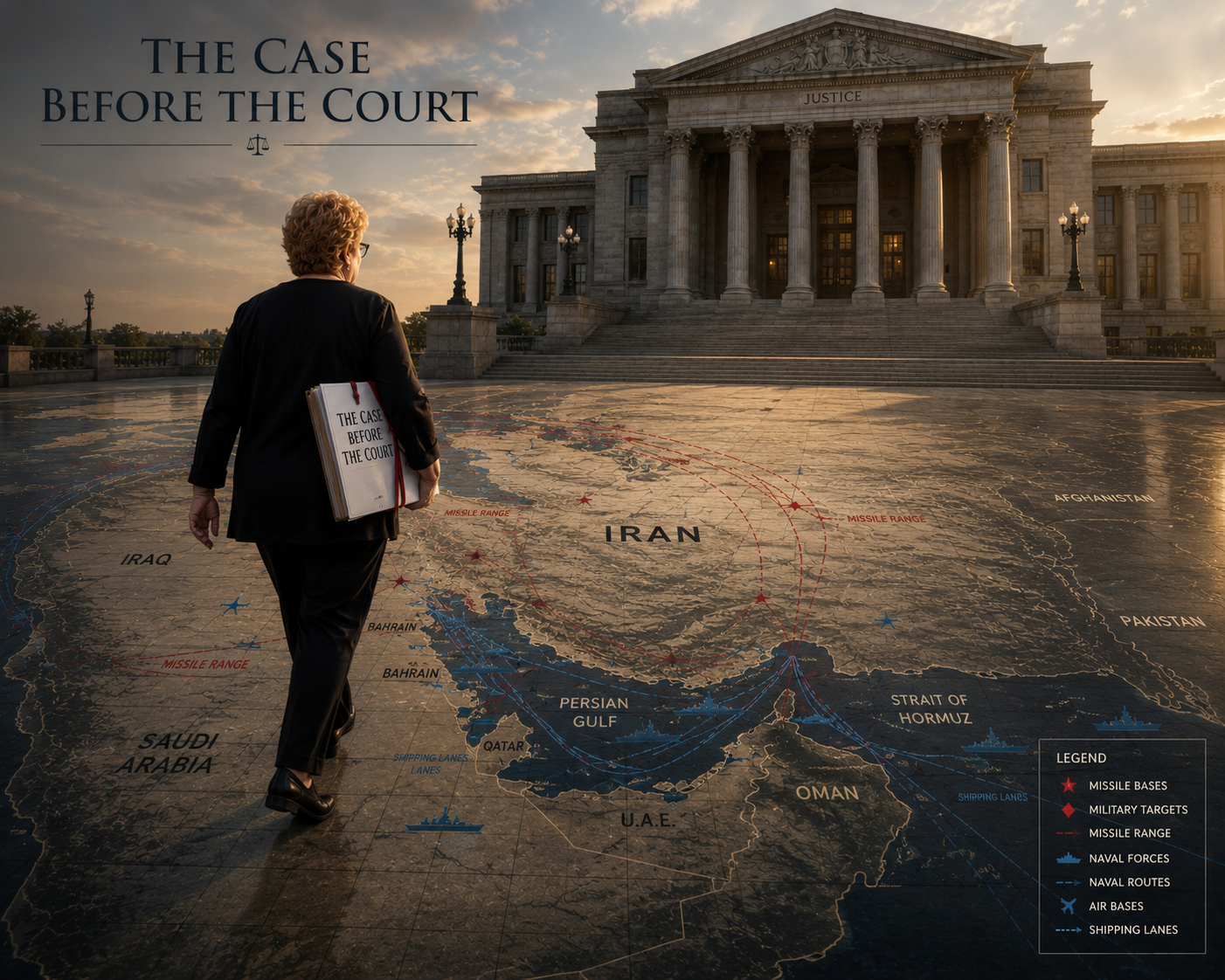
Just love that picture The Case Before he Court with proud Mary
My cartographers love the map with the UAE strategically place
Thank you, Diane. Do you really have cartographers? Plural? Wow.
From 1988 to 1993, when I looked out my kitchen window in UAE, I could see Oman.
You’ve made me think of my husband George who loved being in Abu Dhabi because the younger doctors, mostly Indian and Pakistani, always sought his advice. They would phone our home in the wee hours and he would grab some clothes and run to the car, all smiles.
Say, do you think maybe the tide is turning? Has the harassment of yourself lessened?
The Legend also significant– those missiles and the history– links to my Settle Down Country archival video links– rocket range– von Braun
haven’t watched but seems informative
All About the UAE Military
https://www.youtube.com/watch?v=VFZ2hHPF9HA
The full blown hot war now underway.
Iran Attacks Israel After Israel Attacks Beirut
Today, Israel launched a deadly strike on the Beirut suburb of Dahieh.
It did so despite warnings from Iran that Iran would strike northern Israel if Israel bombed Beirut again.
True to its word, the Iranian military just launched a series of missiles strikes on northern Israel. Iran has dubbed this military operation as “True Promise Five”.
Dimitri Lascaris is in Beirut, Lebanon today, and reports on what is happening there.
https://www.youtube.com/watch?v=U0zQZZWFNxA
I watched a live report for a few hours today at BIN where there were about 5-6 love cameras in Israel and one at least in Iran.
I noted the live three waves from Iran, apparently dealt with in Israel.
Then there were all the reports of various conversations (T and N). T asked N to desist and Tehran said it was a response to I hitting L.
T said a deal ( another!) was to be settled in a few days, so N should sit.
Right who knows what is the agenda.
Seems that N loves stuffing up resolution.
It seems reasonable, considering the history that Israel wants the Litani water and NOTHING WILL STOP ISRAEL TILL It GETS EVERYTHING THAT THEY BELIEVE GOD HAS PROMISED.
Thanks Sandra for the further info. I wish commentators and reporters would present local time realities.
Anyway as for DIMITRI, as with Gaza journos Israel will get him somehow so he better keep an eye on the sky.
🙏
437
Search various latest news sites.
ISRAEL LOBS 12 hits on Iran.
611
Footage of 3 missiles that hit their targets in northern Israel
Usual reporting of “nothing to see here”.
For a update:
237 on 8/6 at:
http://whatreallyhappened.com
Note Clair’s observations.
602
For a update what density you wish to achieve ask real Mary’s guests under Judy Byington at BIN and more with JMC, Gene Decode et.al try it.🙈🤷♂️💁😜
You chose.
902
Try a different universal timeline.💁
907
It has been a 12 hour day, much not passed on, so you have to do some things and research yourselves.
Night
9-25
In honour of day’s public holiday in Australia
• Zadok The Priest Shreds – Classical Shreds
https://www.youtube.com/watch?v=CWtvbXmWqz4
Tsk tsk, Julius.
https://www.youtube.com/watch?v=3ZyYuprUZOw&list=RD3ZyYuprUZOw&start_radio=1
Reminds me of the alleged ‘BIDEN’ inauguration as the fake president.
Pity Mm that you appear to have never heard or considered the DETAILED analysis by Derek Johnson on the clear evidence of Hollywood fakery.
SAD!
107
• CHARLIE KIRK Act could have saved America – samantha starkey
https://www.youtube.com/watch?v=7dCkFh4jamc
• What Is The Price You Are Willing To Pay For A Mobile Phone? – GREATERISRAHELL
https://substack.com/app-link/post?publication_id=1150671&post_id=146062227
Quote:
Think about it. By Now All The Boys Who Were Given A Phone By Viktoria Nuland At Maidan Square Are Dead.
The same can be said about the boyfriends of all the girls who were given one. By now there are very few men alive between the age of fifteen and sixty in Ukraine. Did any of them have a say in what has happened in Ukraine since January of 2014? Would they have wanted all this to happen? I doubt it. Another question is, have any of the girls who lost their boyfriends or soon to be husbands reflected on the fact that the mobile phones they received in Maidan square almost thirteen years ago were instrumental in starting the now four and a half year old war? I doubt that too.
[…]
Two generations of Ukrainian men have been thrown into the meat grinder, and nobody in the collective west seems to care.
• Victoria Nuland – Gonzalo Lira
From 55:14 …
https://www.youtube.com/watch?v=TzR—YDDIQ&t=3314s
And I’ll just throw this in here …
• Victoria Nuland’s Admits Washington Has Spent $5 Billion to “Subvert Ukraine”
https://www.youtube.com/watch?v=U2fYcHLouXY
9/11 – never off topic
From the Epstein Wikiped[ophil]ia propaganda site:
https://en.wikipedia.org/wiki/September_11_attacks
“The September 11 attacks, colloquially known as 9/11, were a coordinated series of suicide attacks perpetrated by the Islamic terrorist organization al-Qaeda against the United States in 2001. Nineteen terrorists hijacked four airliners, then flew one into each of the Twin Towers at the World Trade Center in New York City. The third plane crashed into the Pentagon, the headquarters of the United States Department of Defense, in Arlington County, Virginia. The fourth plane crashed in a rural Pennsylvania field during a passenger revolt. In response to the attacks, the United States launched the global war on terror, seeking to eliminate hostile groups deemed terrorist organizations, and the governments purported to support them. This foreign policy agenda was conducted over the next two decades.”
Thoughts:
• No it wasn’t [suicide attacks perpetrated by the Islamic terrorist organization al-Qaeda] – It was aliens from Tralfamadore [see Kurt Vonnegut].
• No they didn’t [Nineteen terrorists hijacked four airliners]
• No it didn’t [The third plane crashed into the Pentagon]
• No it didn’t [The fourth plane crashed in a rural Pennsylvania field]
• Yes they did [the United States launched the global war on terror – well, Israel actually]
• Yes it was (The foreign policy … ]
Just on the Shanksville [shank – as in ‘pulling one’s leg’] part of this preposterosity
• The Orthodox Nationalist TON0-60-32-6 : Shanksville – Matthew Raphael Johnson Radio Albion
https://www.radioalbion.com/2026/06/the-orthodox-nationalist-shanksville.html
https://odysee.com/@RadioAlbionLBRY:e/TON_060326:c
• JARED KUSHNER AND IVANKA TRUMP’S LATEST LAND GRAB IN ALBANIA – Patrick Henningsen – 21st Century Wire
https://www.youtube.com/watch?v=9ZQW3_xMV64
• 🚨50 MISSILES Hit Tel Nof, Nevatim AIR BASES, Haifa PETROCHEMICAL Plant & Israeli SETTLEMENTS – Mahmood OD | محمود عودة
https://www.youtube.com/watch?v=rhH1GF70n9Q
• Larry Johnson: Iran Missiles Rain Down on Northern Israel – Massive Strikes! – Dialogue Works
https://www.youtube.com/watch?v=-jfbieXSiH0
• Iran War Expands, Houthis Declare War on Israel /Lt Col Daniel Davis – Daniel Davis / Deep Dive
https://www.youtube.com/watch?v=SRCgVFPIxwM
BREAKING! Israel STRIKES Iran! Yemen BLOCKS Red Sea!
https://www.youtube.com/watch?v=5G9AzXrg5Pc
JUST IN: Multiple Explosions ROCK Israel Knesset Building as Iran RETALIATION CONTINUES – OPTM
https://www.youtube.com/watch?v=rH-OXlnv_rw
The ENDGAME Is Unfolding NOW — The SYSTEMS Can’t Hold Much Longer | David Icke
https://www.youtube.com/watch?v=CCunab4Ir8A
The Tiny Dot
https://www.youtube.com/watch?v=FwiIMu76BFI
Pauline Hanson does not realise that “The borrower is servant to the lender” – The tiny minority control the huge majority.
The RBA is a Rothschild private Bank – not a Bank owned by Australia’s government.
Whoever controls credit, controls policy, and with it, power over and above the heads of Government. ( The ABC of Social Credit , page 25, by E.S. Holter; Heritage Bookshops).
Richard McKenna, former president of the Midlands Bank of England said, “Those that create and issue the money and credit, direct the policies of Government and hold in their hands the destiny of the people” ( NDCC , page 41).
Once a Government is in debt to the bankers it is at their mercy. A frightening example of this was cited by the London Financial Times in 1921, which revealed that … “Half a dozen men at the top of The Big Five Banks could upset the whole fabric of Government finance by refraining from renewing Treasury Bills.” ( NDCC , page 41).
The whole aim of practical politics is to keep the populace alarmed (and hence clamorous to be led to safety) by menacing it with an endless series of hobgoblins, all of them imaginary. H. L. Mencken
Summary of events overnight
Iran’s Missiles PUMMEL Israel, Trump Can’t Stop This Lethal Strategy | Elijah Magnier
War correspondent Elijah Magnier joins the show to discuss the massive strikes conducted by Iran on Israel and why Trump was begging both sides to halt the attacks. What are the geopolitical implications of this escalation? Elijah Magnier breaks it down.
https://www.youtube.com/watch?v=5fonunJhEPo
Australian weapons > Sudanese genocide
Link – https://www.youtube.com/watch?v=Cx-BD2dRjH0
Listened to that.
If I was the Minister, I would be looking for those who could answer my obvious questions….. and not appearing as a fool.
122
I am not going to waste my time anymore on the Middle East bigotry, manipulated historic hate, deceit, theft, inhumanity and murders.
TILL THEY ALL DESTROY THE PLACE AND GET THE RESULTS THEY DESERVE.
I suggest that Australia pulls down all the shutters and sit it out.
Not our business dealing with indoors.
117
‘IDIOTS’